
Cannabis (marijuana) has been legalised in an increasing number of countries and regions in recent years, and there is growing interest in its health effects and risks.
This article details the health effects and risks of cannabis, based on the latest research findings.

Health benefits of cannabis

Pain relief
Cannabis contains the major cannabinoids THC (tetrahydrocannabinol) and CBD (cannabidiol). These components have been shown to relieve chronic pain.
In particular, pain relief has been reported in cancer and multiple sclerosis patients.
Mental health improvement
CBD has attracted attention in the medical field for its potential to reduce symptoms of anxiety and depression.
Studies have confirmed that CBD reduces stress and has a relaxing effect.
Treatment of neurological disorders
Cannabis ingredients have been shown to potentially improve symptoms of neurological disorders such as Parkinson’s disease and Alzheimer’s disease.
A CBD preparation called Epidiolex has also been approved by the FDA for the treatment of certain epilepsy syndromes.
Improvement of sleep disorders.
CBD has also been reported to help against insomnia and other sleep disorders.
Studies have shown that CBD can improve sleep quality and facilitate falling asleep.
Reduction of inflammation
Cannabis has anti-inflammatory properties and may help treat arthritis and other inflammatory conditions.
CBD is particularly effective in modulating the immune system and reducing inflammation.
Risks of cannabis.
Mental health impacts.
Long-term use of cannabis can have negative effects on mental health.
Particularly in young people, the risk of cognitive decline and psychiatric disorders has been noted.
Studies have shown that cannabis use increases the risk of psychosis and anxiety in some people.
Respiratory effects.
Smoking cannabis can have the same negative effects on the respiratory tract as smoking tobacco.
Prolonged smoking is known to increase the risk of chronic bronchitis and emphysema.
Addictiveness and dependency
Cannabis is addictive and can cause dependence.
The risk of dependence is particularly increased if use begins at a young age.
Statistics show that approximately 10% of cannabis users become dependent.
This is a low figure compared to other addictive substances.
Comparison of other addictions
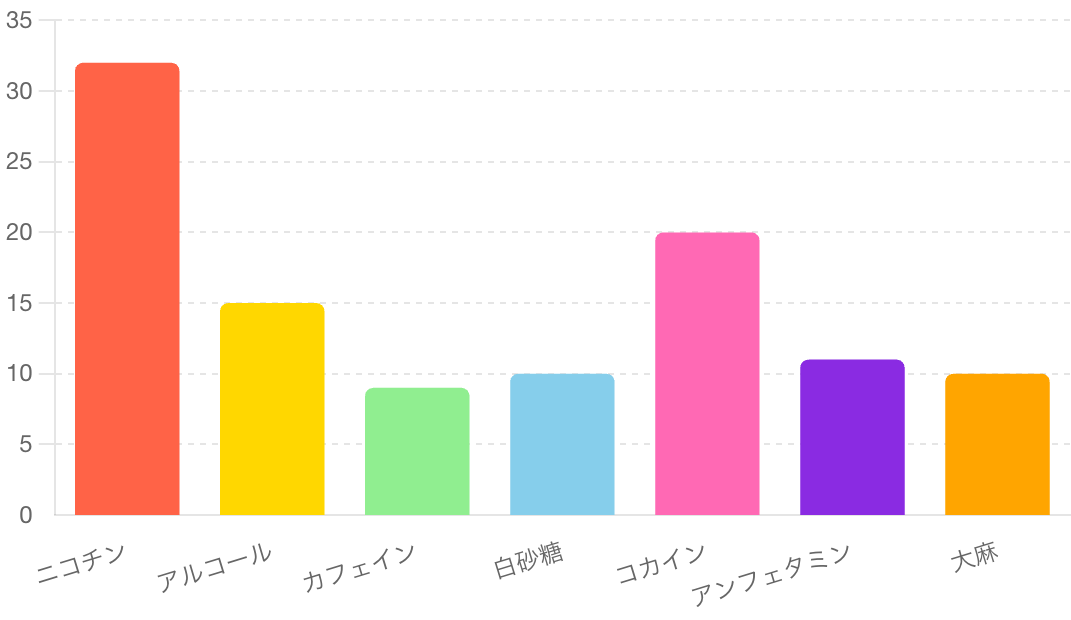
- nicotine:Nicotine is the main ingredient in tobacco and is known to be highly addictive.
Nicotine stimulates the release of dopamine in the brain, causing feelings of pleasure.Long-term use causes strong dependence and withdrawal symptoms .
(Caffeine Addiction Help) (Sober Recovery) - alcohol:Alcohol is a widely consumed luxury drink and can be addictive.Prolonged drinking increases the risk of addiction and can lead to liver disease, heart disease and other health problems .
(Sober Recovery) - caffeine:Caffeine is a stimulant found in coffee, energy drinks and tea and is addictive. High doses of caffeine can cause dependence and withdrawal symptoms (headache, fatigue, irritability) .
(BioMed Central) - white sugar:White sugar is addictive and promotes dopamine release, causing feelings of pleasure.Animal studies have shown sugar to be as addictive as cocaine and heroin.
In humans, excessive sugar intake can cause health problems such as obesity and diabetes .
(Caffeine Addiction Help) (Sober Recovery) - cocaine:Cocaine is a powerful central nervous system stimulant and highly addictive.Even short-term use can lead to strong dependence and cause serious health problems, including heart disease, stroke and mental illness. (Oxford Academic)
- amphetamine:Amphetamines are central nervous system stimulants and are used for medical purposes but can also be abused. It can cause dependence and carries the risk of cardiovascular and mental health problems. (Oxford Academic)
- cannabis:Cannabis is a psychoactive substance and is considered addictive.
The risk of dependence is increased, especially if use is initiated at a young age. Long-term use of cannabis may increase the risk of cognitive decline and psychiatric disorders.
Cognitive decline
Studies have shown that long-term use of cannabis can lead to impaired memory, learning and attention.
Use, especially at a young age, can have a negative impact on brain development.
Risk of road traffic accidents
Driving after cannabis use has been reported to cause delayed reaction times and reduced attention span, increasing the risk of road accidents. Even in legalised areas, driving after cannabis use is prohibited by law.
Legislation on the use of cannabis.
Legislation on the use of cannabis varies from country to country and region to region.
In regions where medical cannabis is legalised, its use is only permitted with a doctor’s prescription if certain medical conditions are met. Meanwhile, recreational cannabis use has been legalised in an increasing number of regions, but proper use and regulation is required.
Legal regulation of medical cannabis.
The use of medical cannabis must be prescribed by a doctor for certain medical conditions.
These include chronic pain, epilepsy, conditions caused by cancer and multiple sclerosis.
The use of medical cannabis is important for improving the quality of life of patients.
Legal regulation of recreational cannabis.
The use of recreational cannabis is legal in some countries and states.
This includes regulations such as age limits, restrictions on the amount purchased and bans on use in public places.
The aim is to protect public safety and health by establishing appropriate regulations.
summary
Cannabis has both health benefits and risks.
When using it, it is important to fully understand the effects and risks and to choose the appropriate method of use.
It is also recommended to comply with legal regulations and to seek medical and professional advice.
Use cannabis safely and effectively, based on the latest research-based information.