For those interested in the different ways to use cannabis, this guide will detail the differences between inhalation, edibles, and oils.
By reading this article, you will understand the characteristics, advantages, and disadvantages of each method, helping you find the one that suits you best.
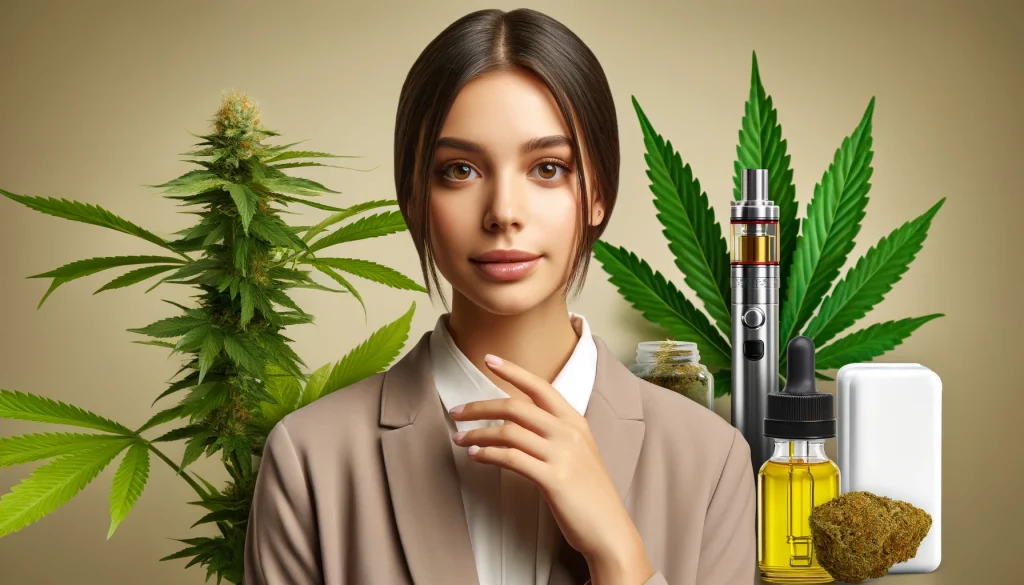
Inhalation Methods
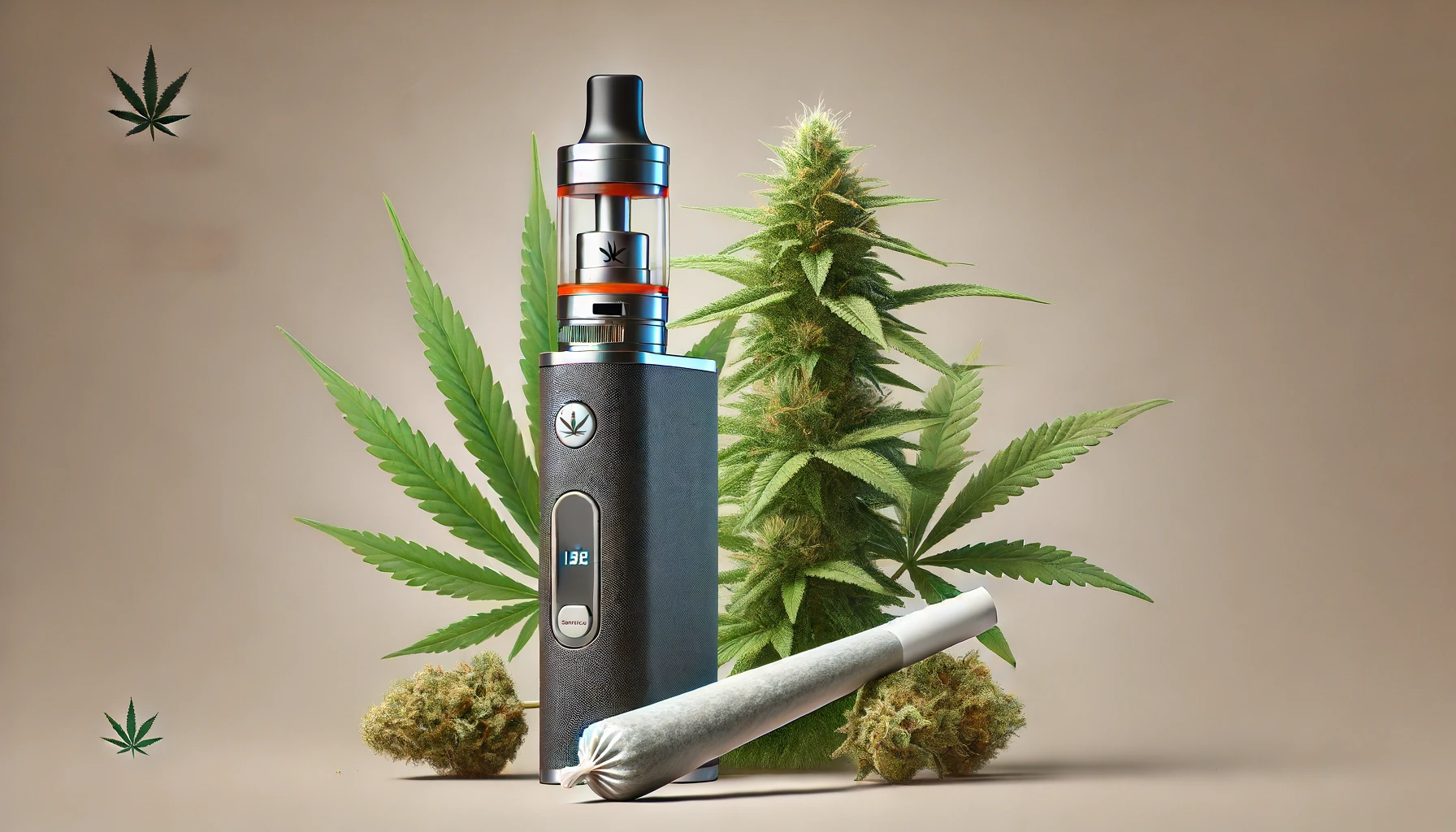
Smoking
Smoking is the most traditional method of consuming cannabis.
Using joints, pipes, or bongs, you burn the dried cannabis flower and inhale the smoke.
Smoking provides rapid effects, allowing you to feel the impact within minutes.
Advantages
- Immediate effects: The effects are felt quickly, making it suitable for immediate symptom relief.
- Adjustable dosage: You can easily adjust the amount you consume to meet your individual needs.
Disadvantages
- Health risks: Smoking can strain your lungs and respiratory system. Long-term smoking may increase the risk of bronchitis or lung cancer.
- Odor: Cannabis smoke has a strong, distinctive smell that is easily noticeable.
Vaporizing
Vaporizing (vaping) involves heating cannabis flowers or extracts to produce vapor, which you then inhale.
Unlike smoking, vaporizing heats the cannabis without combustion, resulting in fewer health risks.
Advantages
- Reduced health risks: Since no smoke is inhaled, vaporizing is less harmful to your lungs and respiratory system than smoking.
- Better flavor: Vaporizing preserves the cannabis flavor better since there is no combustion.
Disadvantages
- Initial cost: Purchasing a vaporizer requires an upfront investment.
- Maintenance: Regular cleaning is necessary to keep the vaporizer functioning well.
Edible Methods
Edibles
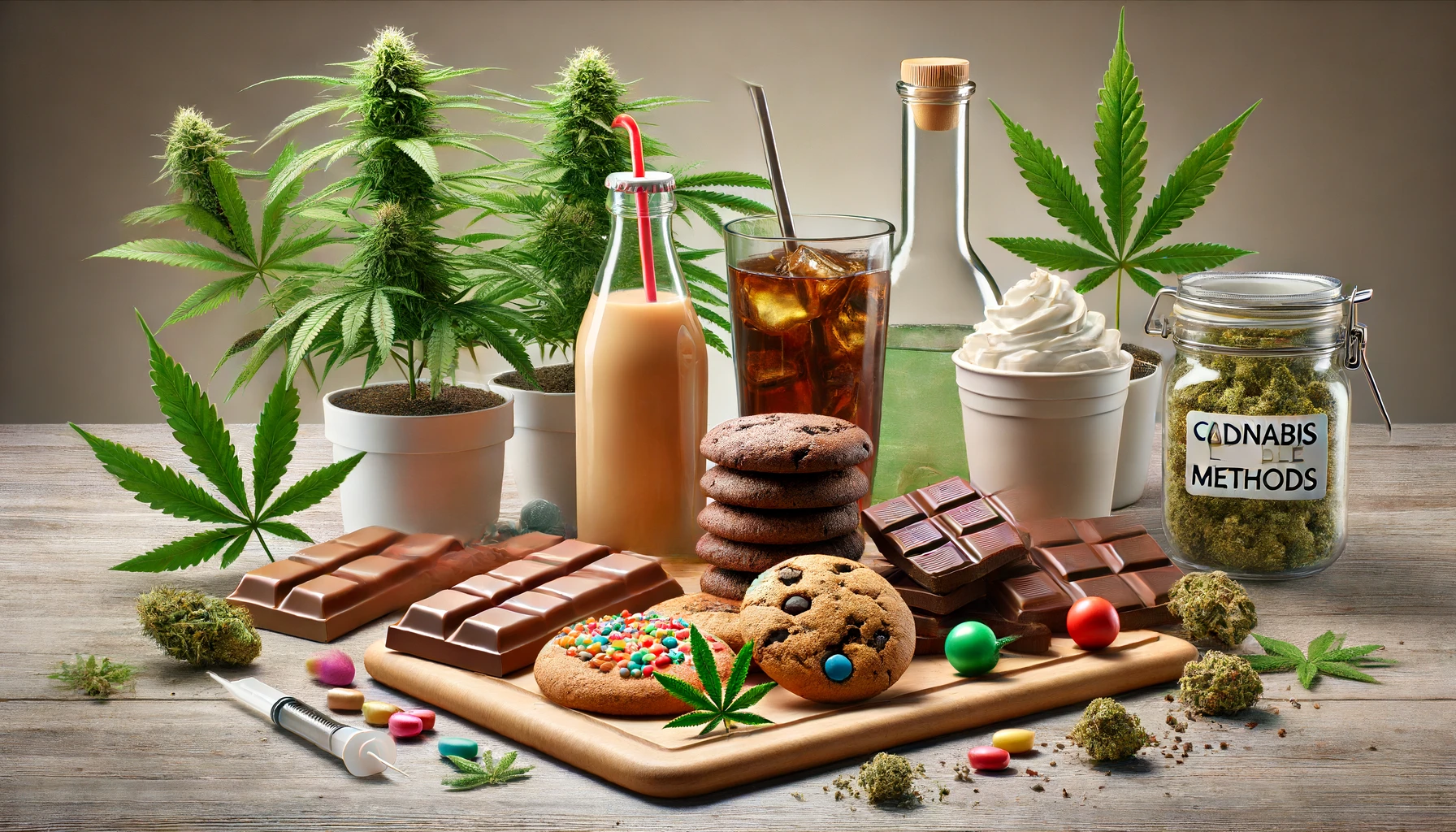
Edibles are foods or beverages infused with cannabis.
Candies, cookies, chocolates, and drinks are common examples.
Edibles are absorbed through the digestive system, which means it takes longer for the effects to be felt, but they last longer.
Advantages
- Long-lasting effects: The effects last longer, making edibles suitable for managing chronic pain or anxiety.
- Reduced health risks: There is no strain on the lungs or respiratory system compared to smoking or vaporizing.
Disadvantages
- Delayed effects: It can take 30 minutes to 2 hours for the effects to be felt, making edibles unsuitable for immediate relief.
- Dosage control: It can be challenging to control the dosage, and consuming too much at once can lead to overconsumption.
Tinctures
Tinctures are cannabis extracts dissolved in alcohol or glycerin, administered sublingually (under the tongue).
They are absorbed directly through the mucous membranes, providing quicker effects than edibles.
Advantages
- Quick effects: Tinctures work faster than edibles.
- Ease of use: They are easy to use—just a few drops under the tongue.
Disadvantages
- Taste: Alcohol-based tinctures can have a bitter taste.
- Variable absorption: Individual absorption rates can vary, affecting the intensity of the effects.
Oil Methods
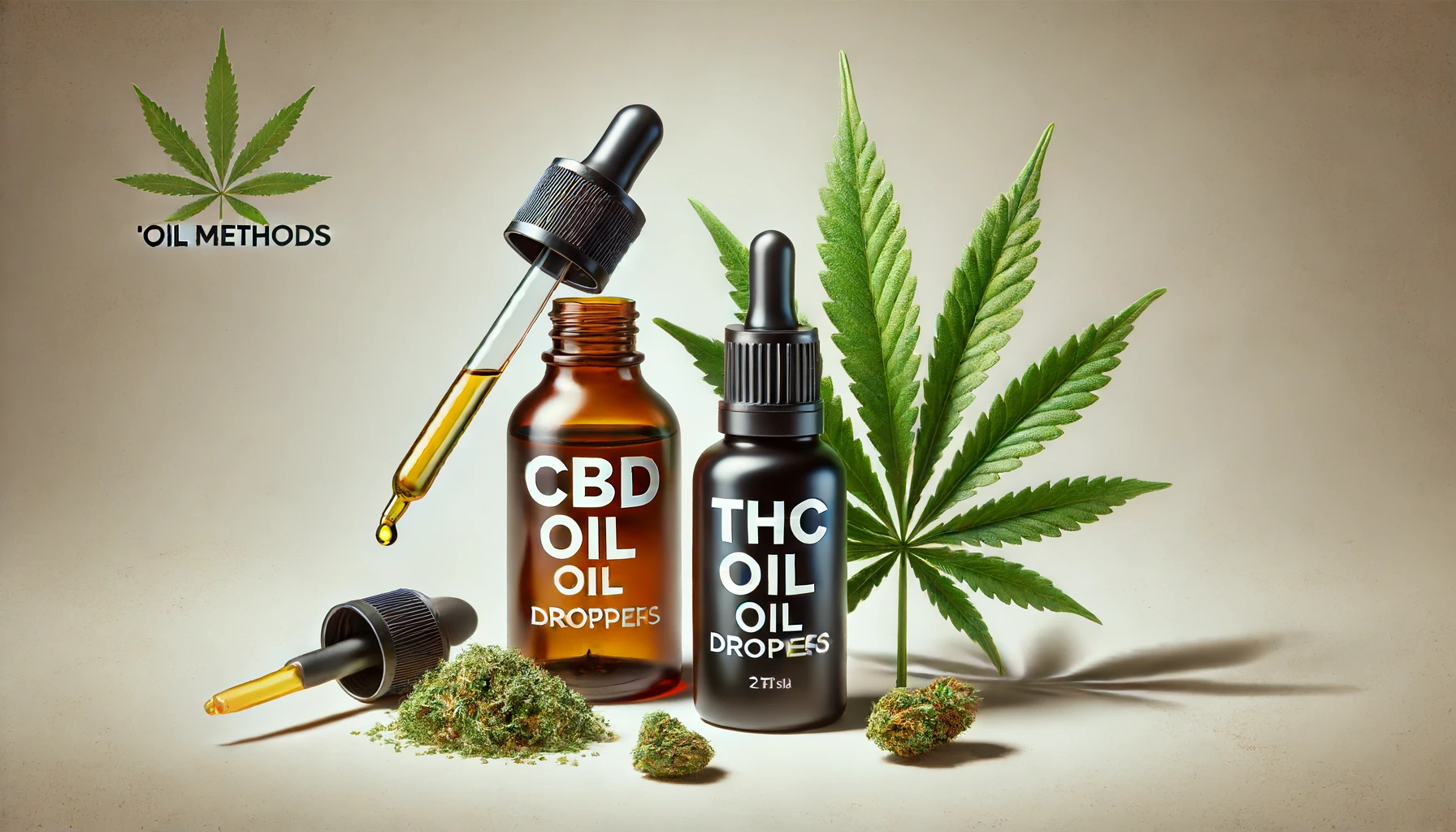
CBD Oil
CBD oil contains cannabidiol (CBD), a non-psychoactive compound in cannabis.
It can be taken sublingually with a dropper or mixed into food and drinks.
CBD oil is known for its relaxing effects and ability to relieve pain and anxiety.
Advantages
- No psychoactive effects: CBD does not produce a high, making it suitable for daily use.
- Versatile: It can be consumed in various ways, such as adding it to food or drinks.
Disadvantages
- Variable effects: The effects can vary from person to person.
- Cost: High-quality CBD oil can be expensive.
THC Oil
THC oil contains tetrahydrocannabinol (THC), the psychoactive compound in cannabis, and requires careful use.
It can be taken sublingually with a dropper or inhaled with a vaporizer.
Advantages
- Potent effects: THC has strong pain-relieving and relaxing effects.
- Versatile: It can be consumed in various ways, depending on your needs.
Disadvantages
- Psychoactive effects: THC produces a high, requiring careful use, especially during the day or before driving.
- Legal restrictions: THC is regulated in many regions, so it’s essential to check local laws before use.
Comparison and Selection
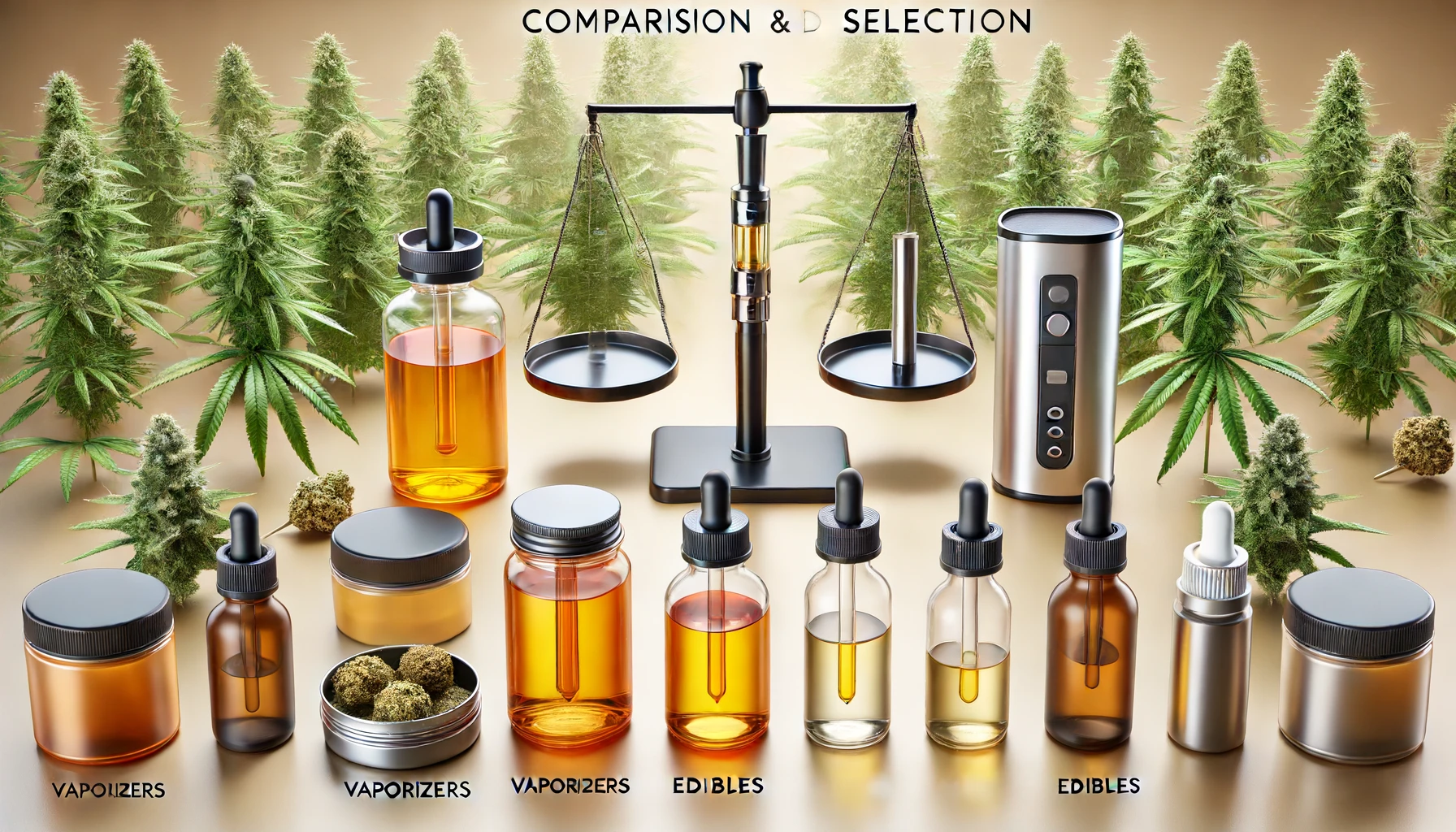
Choosing Based on Purpose
When selecting a cannabis consumption method, consider your intended use.
For immediate relief, smoking or vaporizing is suitable, while edibles and tinctures are better for long-lasting effects.
If you want to avoid psychoactive effects, CBD oil is a good choice.
Considering Individual Physiology and Lifestyle
Your individual physiology and lifestyle should also be considered.
Smoking and vaporizing can strain your lungs and respiratory system, making them less suitable for those with respiratory issues. Edibles and tinctures are absorbed through the digestive system, so they should be used cautiously by those with sensitive digestive systems.
Checking Legal Regulations
Cannabis use is regulated by law in many regions.
THC-containing products, in particular, are heavily regulated.
Always check local laws to ensure you’re using products legally.
Additionally, be mindful of cannabis laws when traveling.
Examples of Each Method
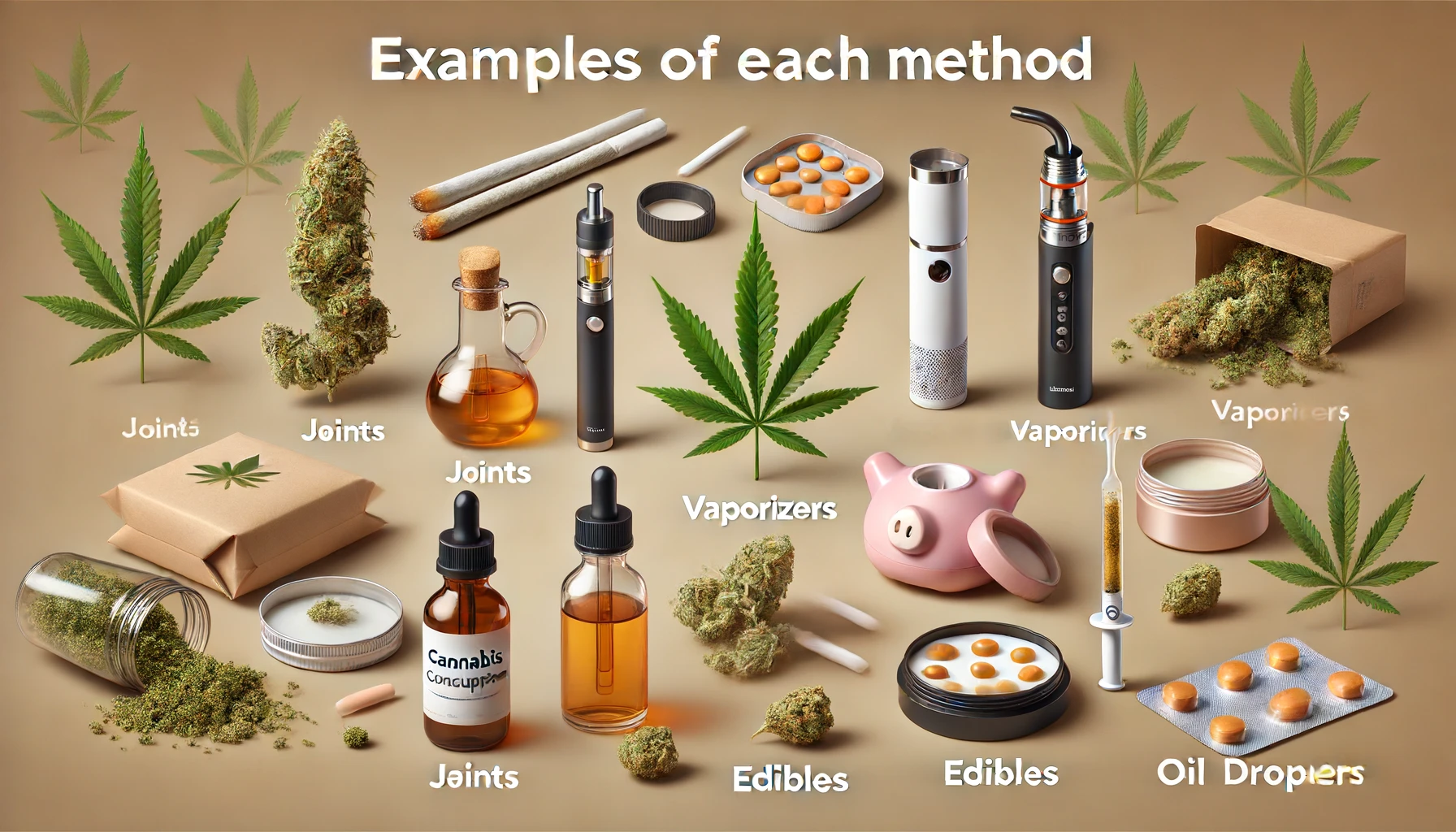
Smoking Examples
Smoking methods include joints, pipes, and bongs.
Joints are hand-rolled cannabis cigarettes, popular for their simplicity.
Pipes are small devices where cannabis is packed and lit, and bongs use water to cool the smoke, reducing throat irritation.
Vaporizer Examples
Vaporizers come in portable and desktop models.
Portable vaporizers are convenient for on-the-go use, while desktop models are suited for home use and offer precise temperature control.
Both types provide a healthier alternative to smoking by inhaling vapor rather than smoke.
Edible Examples
Edibles include candies, cookies, chocolates, and beverages, all infused with cannabis.
They can also be made at home or purchased from stores.
Edibles are ideal for those who prefer not to smoke or vape, offering a discreet and tasty way to consume cannabis.
Tincture Examples
Tinctures are typically administered sublingually using a dropper, but they can also be added to food and drinks.
This method bypasses the digestive system, allowing for quicker absorption and more immediate effects than edibles.
CBD Oil Examples
CBD oil is commonly taken sublingually or added to smoothies and salad dressings.
Its versatility and lack of psychoactive effects make it suitable for daily use, providing relief from anxiety, pain, and other conditions without impairing function.
THC Oil Examples
THC oil can be administered sublingually or inhaled using a vaporizer.
Sublingual administration provides longer-lasting effects, while vaporizing offers immediate relief. However, THC oil should be used cautiously due to its psychoactive effects and legal restrictions.
Comparison Chart
| Method | Advantages | Disadvantages | Onset Time | Duration |
|---|---|---|---|---|
| Smoking | Immediate effects, adjustable dosage | Health risks, strong odor | Minutes | 1-3 hours |
| Vaporizing | Reduced health risks, better flavor | Initial cost, maintenance required | Minutes | 1-3 hours |
| Edibles | Long-lasting effects, reduced health risks | Delayed effects, dosage control difficulty | 30 mins-2 hours | 4-6 hours |
| Tinctures | Quick effects, easy to use | Bitter taste, variable absorption | 15-45 mins | 2-4 hours |
| CBD Oil | No psychoactive effects, versatile | Variable effects, high cost | 15-45 mins | 2-4 hours |
| THC Oil | Potent effects, versatile | Psychoactive effects, legal restrictions | 15-45 mins (sublingual) / Minutes (vaporizing) | 2-4 hours (sublingual) / 1-3 hours (vaporizing) |
Legal Regulations and Safety
Checking Legal Regulations
Cannabis use is regulated by law in many regions.
THC-containing products, in particular, are heavily regulated.
Always check local laws to ensure you’re using products legally.
Additionally, be mindful of cannabis laws when traveling.
Guidelines for Safe Use
- Appropriate Dosage: Start with a small amount and gradually find the right dosage, especially if you’re new to cannabis or trying a new product.
- Safe Environment: Use cannabis in a safe, relaxing environment. Having trusted friends or family nearby can provide reassurance, particularly if it’s your first time.
- Consult a Medical Professional: If you have pre-existing medical conditions or are taking other medications, consult a healthcare professional for advice on safe cannabis use.
Conclusion
Cannabis consumption methods are diverse, each with its characteristics, advantages, and disadvantages. Whether you prefer inhalation, edibles, or oils, understanding the differences can help you make an informed choice that fits your needs and lifestyle. This article aims to provide a comprehensive understanding of each method, assisting you in finding the best way to consume cannabis.