
For those interested in the history and cultural impact of cannabis, this guide provides a detailed overview of how cannabis has been used from ancient times to the modern era and how it has influenced culture.
By reading this article, you will gain a deep understanding of the historical background and cultural impact of cannabis and reassess its significance.
Origins and Ancient Uses of Cannabis
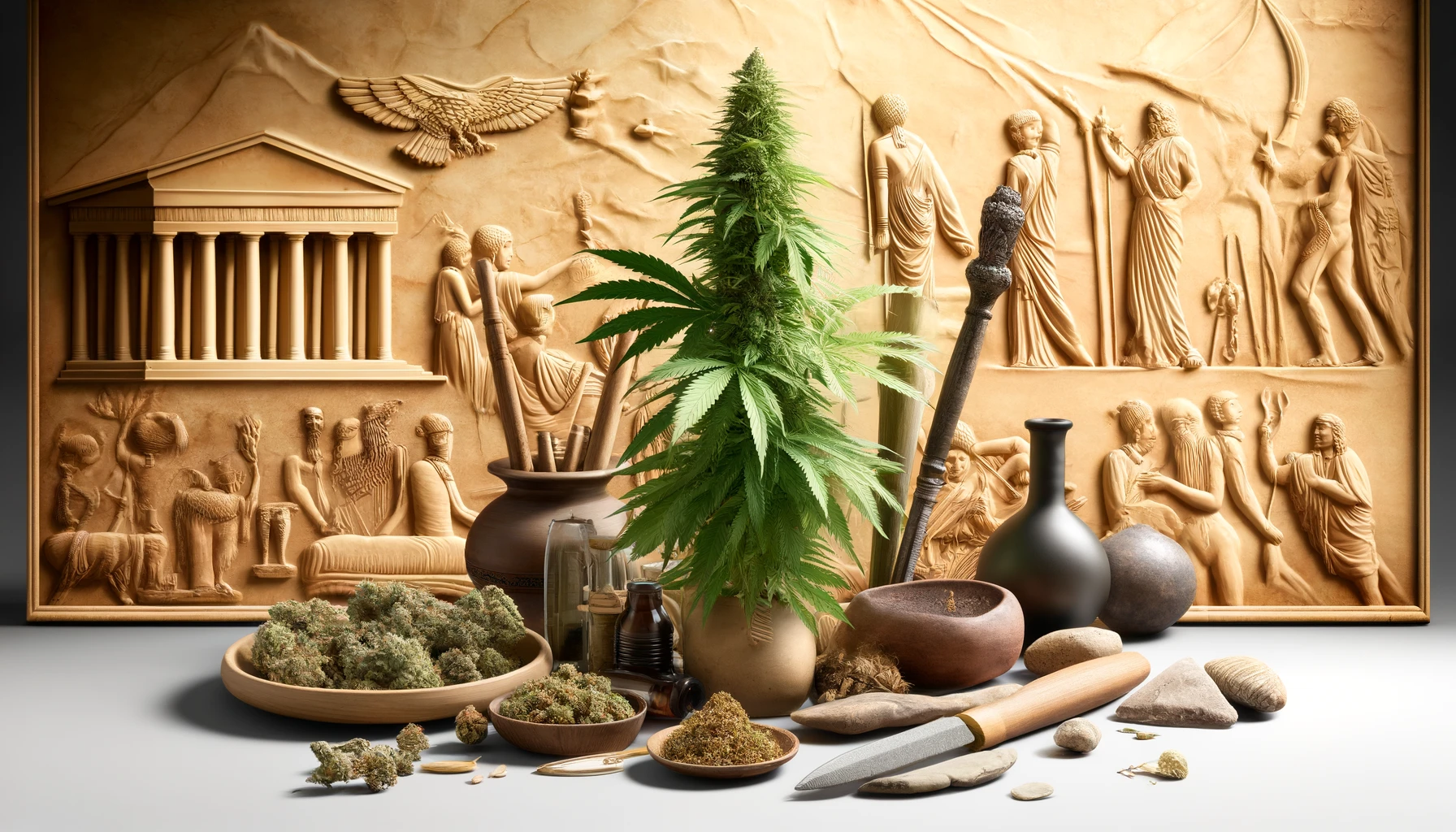
Early Cultivation and Uses
Cannabis has been cultivated for thousands of years, with evidence of cultivation in China dating back to around 5000 BCE.
In ancient China, cannabis fibers were used to make cloth and rope, and the seeds were used for food and medicinal purposes.
Archaeological evidence suggests that cannabis was an important resource for ancient peoples, utilized for various purposes.
Ancient Egypt
In ancient Egypt, cannabis was used for medicinal purposes. Papyrus texts record the use of cannabis to treat eye conditions and alleviate inflammation.
Cannabis seeds were also used as a nutritious food source.
Additionally, it is believed that cannabis may have been used in religious rituals, considered a sacred plant by the ancient Egyptians.
Cannabis in India
In India, cannabis has been regarded as a sacred plant and has been used in many religious rituals.
Ancient Indian texts, such as the Vedas, describe cannabis as a gift from the gods, used in meditation and prayer.
In Ayurveda, the traditional Indian system of medicine, cannabis has been used as a therapeutic agent. Shamans and monks particularly used cannabis for spiritual enlightenment and healing.
Cannabis in the Middle East
In the Middle East, cannabis has been widely used since ancient times. In the Persian Empire, cannabis was used medicinally to treat pain and insomnia.
Under the influence of Islam, cannabis, known as “hashish,” was used in religious ceremonies and meditation. Poets and scholars in the Middle East also enjoyed the benefits of cannabis, which influenced their works significantly.
Cannabis from the Middle Ages to the Modern Era
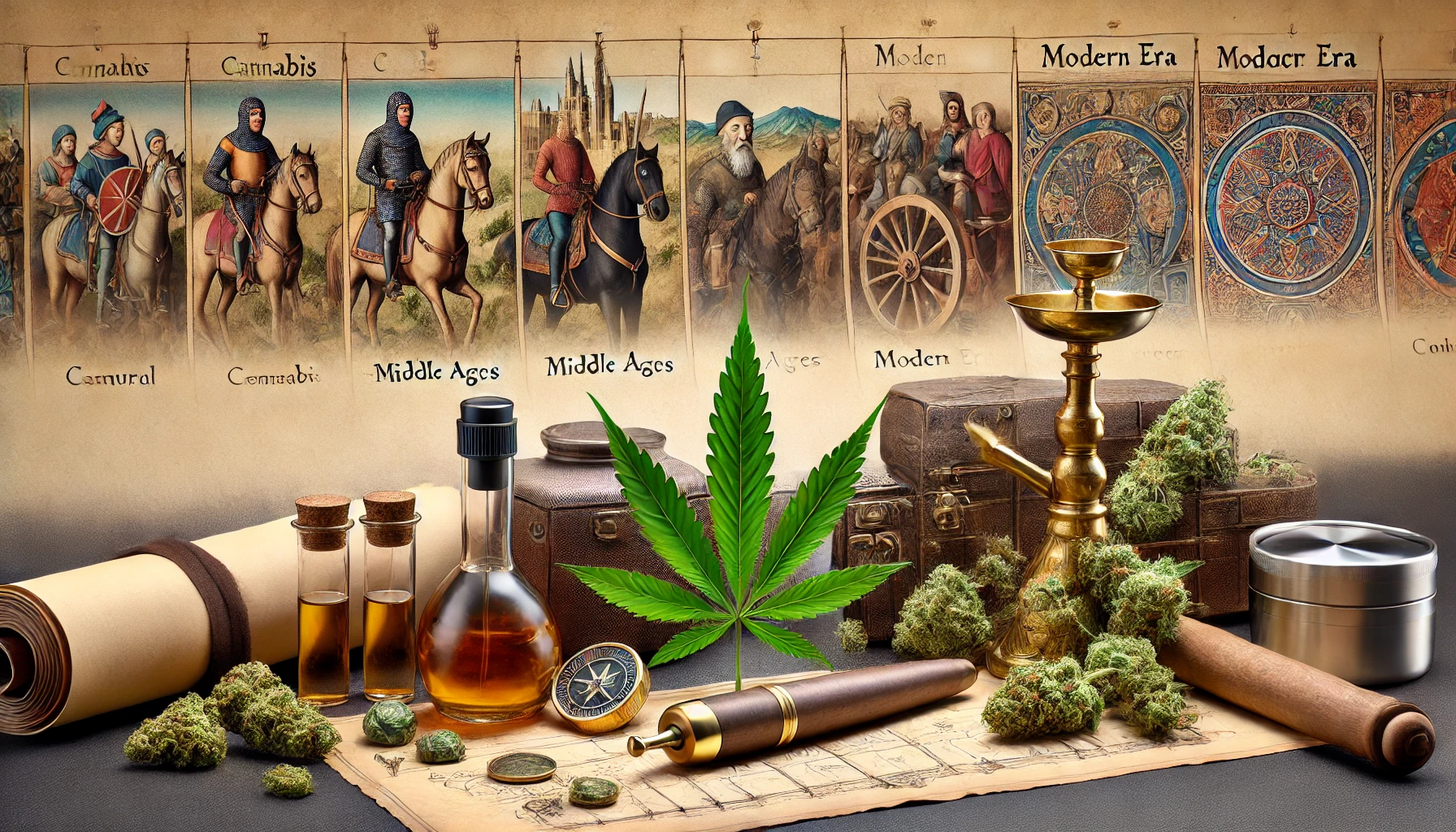
Medieval Europe
In medieval Europe, cannabis was primarily used as a fiber crop.
Cannabis fibers were strong and durable, making them valuable for making sails, ropes, and clothing. Cannabis was also used medicinally to treat pain and insomnia. For European farmers, cannabis was an essential crop, and its cultivation and processing had a significant impact on the local economy.
Medieval Medicine
Medieval physicians used cannabis for various treatments.
Hildegard of Bingen, a German abbess, recommended cannabis for treating headaches and joint pain.
Additionally, Nicholas Culpeper, an English herbalist, recognized the therapeutic effects of cannabis and widely communicated its benefits. Cannabis frequently appeared in medieval medical texts as a remedy for pain relief and improved sleep.
Modern America
In America, cannabis was widely used as a medicinal product from the late 19th to early 20th centuries. Medical texts of the time documented cannabis’s effectiveness in treating various ailments, and many physicians prescribed it.
Cannabis-infused medicines were sold in pharmacies and used in households.
However, as the 20th century progressed, cannabis use became regulated, sparking debates about its legality.
Cannabis Regulation and Propaganda
During the 1920s and 1930s, negative campaigns against cannabis spread in America.
Propaganda films like “Reefer Madness” exaggerated the dangers of cannabis use.
As a result, many states banned cannabis use, and the federal government tightened regulations.
This period saw the proliferation of prejudices and misconceptions about cannabis, which continue to influence modern perceptions.
Modern Cannabis Culture
Recreational and Medical Use
In contemporary times, cannabis has regained attention.
Many countries and states have legalized medical cannabis, benefiting numerous patients.
Scientific research has proven cannabis’s effectiveness in treating chronic pain, anxiety, and epilepsy.
As medical cannabis use expands, so does the legalization of recreational cannabis.
In regions where cannabis use is legalized, the cannabis industry has grown rapidly, providing economic benefits.
Growth of the Cannabis Industry
Legalization in places like Canada and certain U.S. states has created new business opportunities.
Companies involved in cannabis cultivation, processing, and sales have emerged, creating numerous jobs.
Cannabis tourism has also become popular, attracting visitors looking to legally enjoy cannabis.
This has led to economic revitalization in these areas, contributing to community development.
Counterculture and Cannabis
In the 1960s and 1970s, cannabis became a symbol of counterculture.
Within the hippie movement, cannabis was seen as a symbol of freedom and peace, influencing music, art, and literature.
During this period, cannabis spread as a means of rebellion and self-expression among young people.
Music and Cannabis
Cannabis has played a significant role in the music world. Jazz, reggae, and rock musicians have used cannabis to enhance creativity.
Reggae musician Bob Marley, in particular, embraced cannabis as a symbol of peace and love, and his cultural impact is immeasurable. For artists, cannabis has been a vital tool for relaxation and inspiration, resulting in many iconic songs.
Film and Cannabis
In the film industry, cannabis has often been a central theme.
Comedy films and documentaries depicting cannabis use and its effects have played a role in changing perceptions of cannabis. Films like “Half Baked” and “Pineapple Express” are beloved by many.
Documentaries supporting cannabis legalization are also increasing, promoting a reevaluation of cannabis’s societal role.
Cannabis Legalization Movement
Recently, the cannabis legalization movement has gained momentum worldwide.
In countries like Canada and Uruguay, as well as several U.S. states, cannabis use has been legalized, and the cannabis industry has grown rapidly. This movement is based on proven economic benefits and medical efficacy, as well as efforts to overcome social prejudices and stigma.
Legal Regulation Relaxation and Societal Change
The legalization of cannabis has had various societal impacts.
Reductions in crime rates, economic revitalization, and job creation are examples.
Additionally, quality control and regulations have been strengthened to ensure consumer safety, allowing safer cannabis use.
Expansion of Medical Cannabis
With the legalization of medical cannabis, many patients can now use cannabis to manage chronic pain, anxiety, epilepsy, PTSD, and more.
The use of medical cannabis significantly improves patients’ quality of life and reduces medical costs.
This has led to a reevaluation of the medical benefits of cannabis and further research.
Cultural Impact of Cannabis
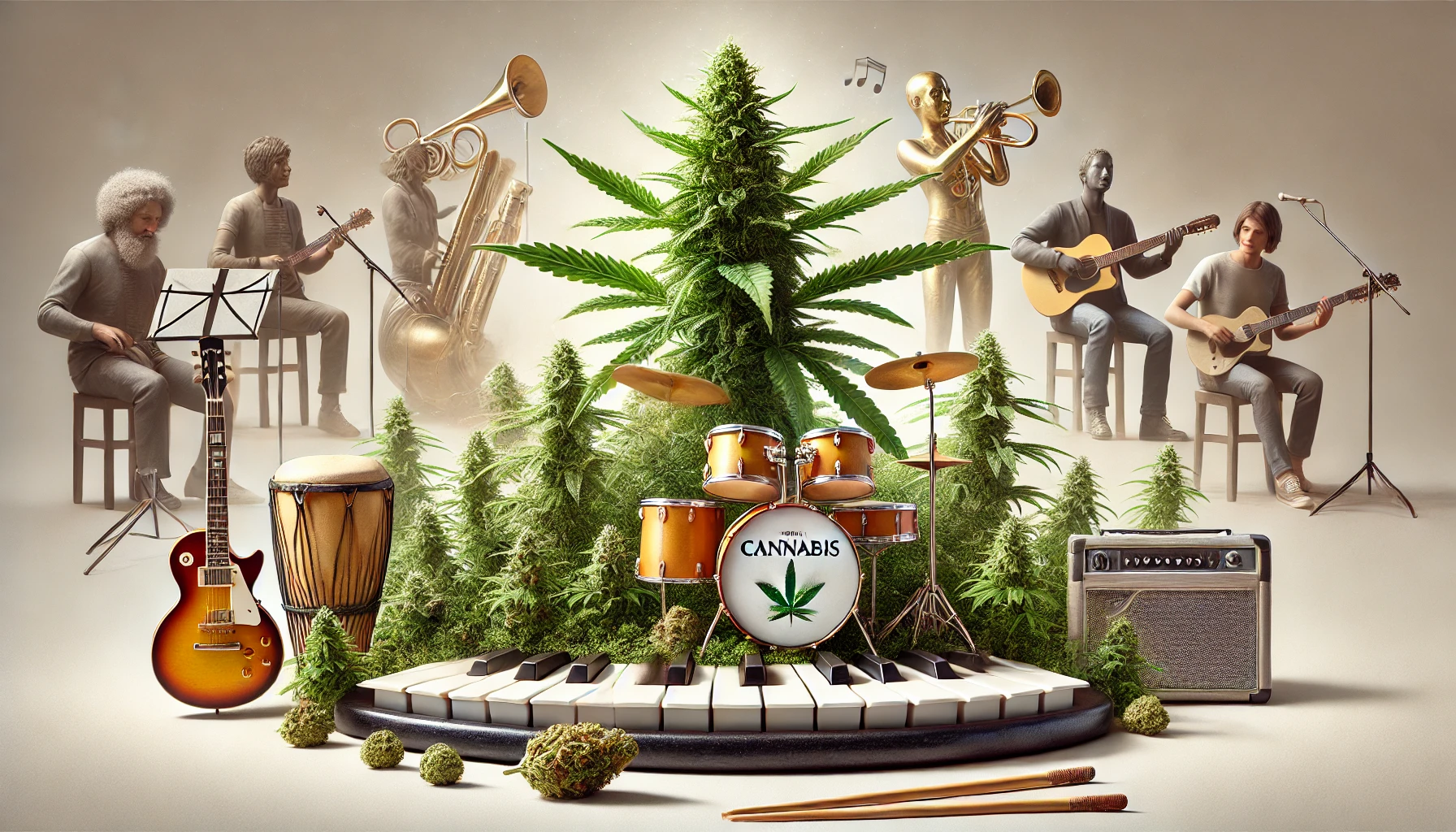
Music and Cannabis
In the music world, cannabis has long been used as a tool to enhance creativity.
Jazz musicians, rock stars, and reggae artists have found cannabis essential in their creative processes, leading to the creation of many iconic works.
Jazz and Cannabis
In the 1920s Jazz Age, many jazz musicians used cannabis.
Renowned artists like Louis Armstrong and Billie Holiday produced numerous works influenced by cannabis.
Cannabis provided musicians with relaxation and creativity, contributing to jazz innovation and development.
Reggae and Cannabis
The relationship between reggae music and cannabis is particularly strong.
Reggae icon Bob Marley used cannabis as part of religious rituals and meditation, creating numerous songs inspired by its effects.
Marley’s music, with its messages of peace, love, and freedom, influenced people worldwide.
Cannabis continues to function as a spiritual foundation for reggae music.
Film and Cannabis
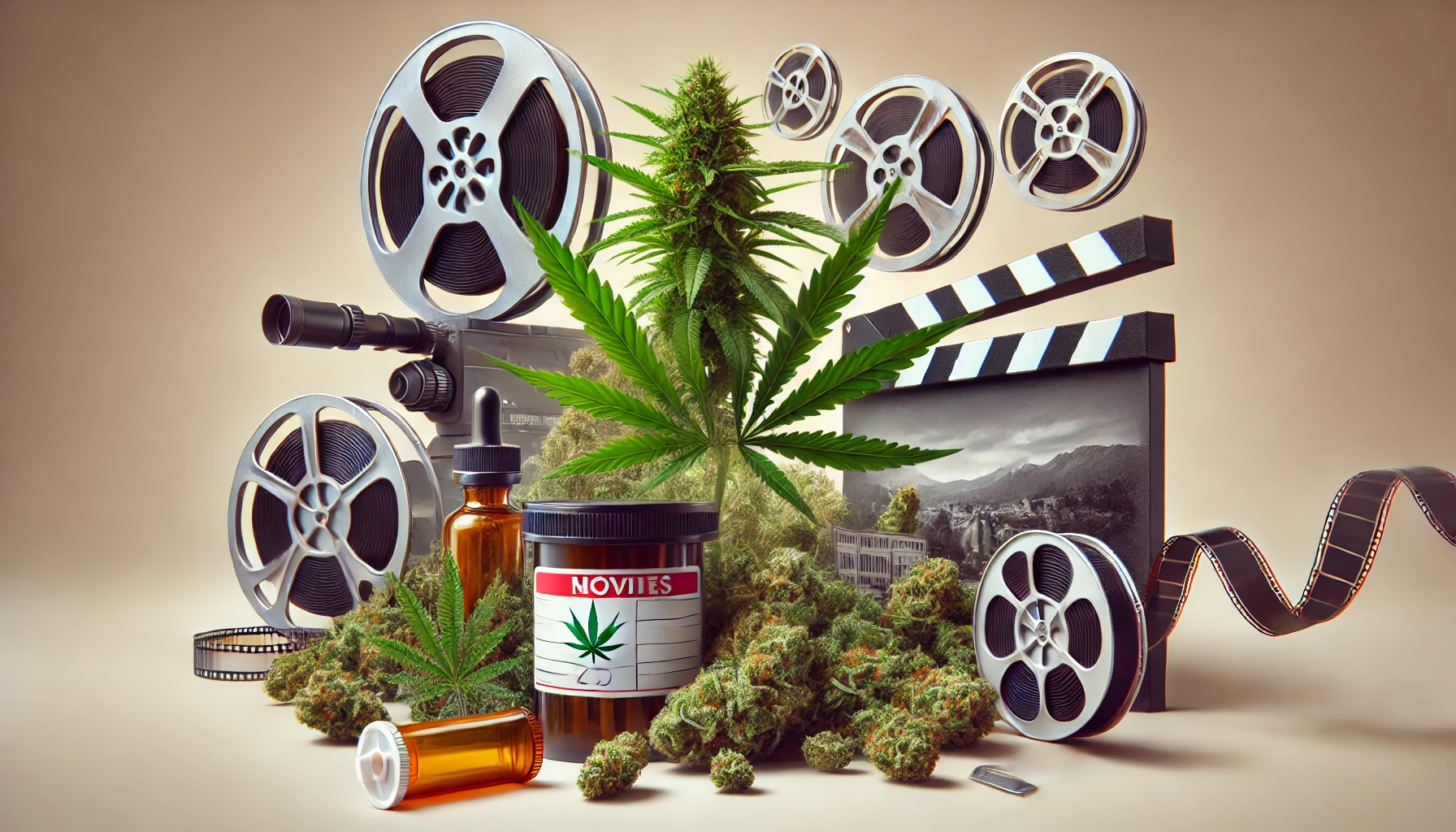
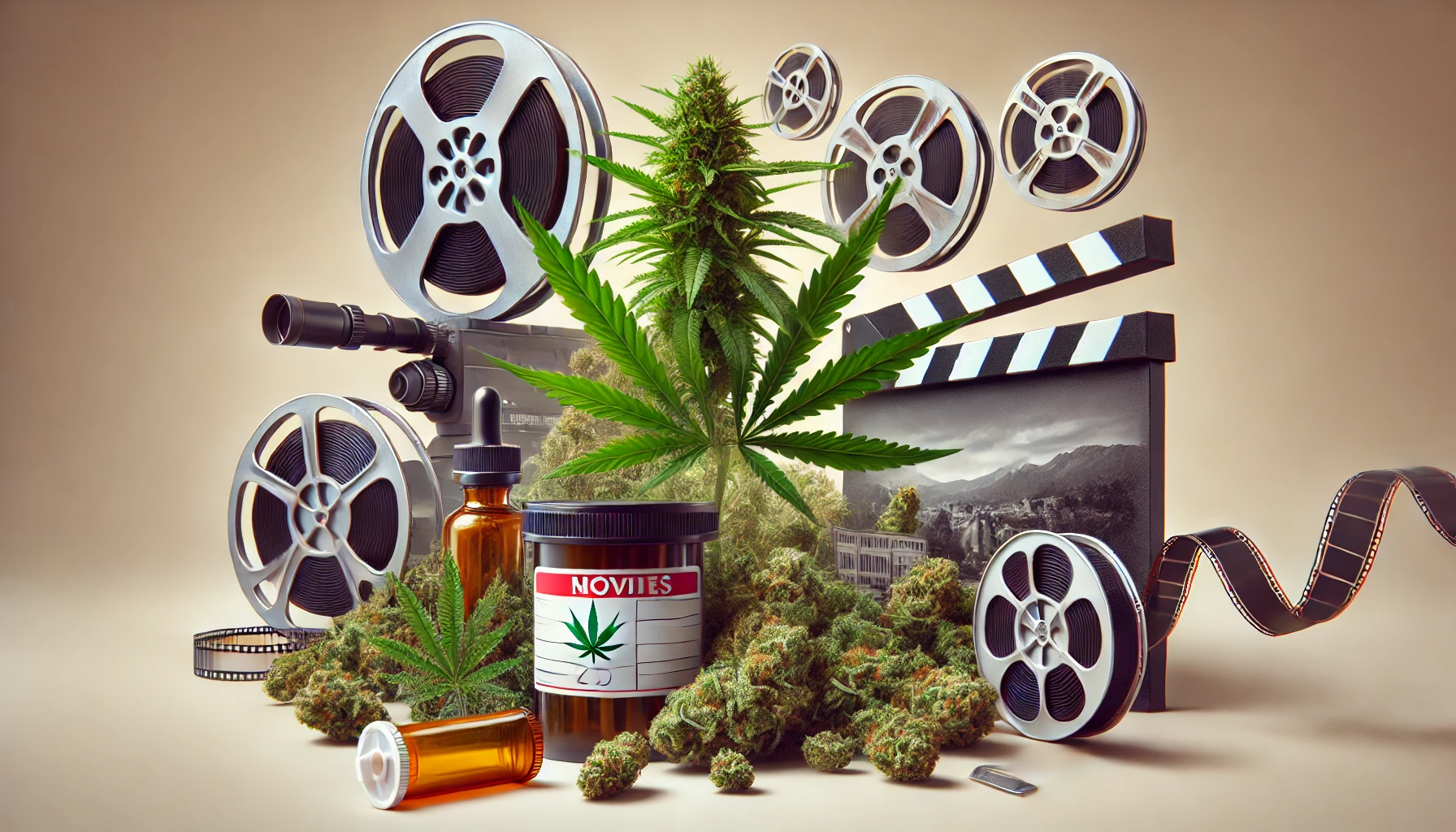
The film industry also frequently addresses cannabis.
Films that depict cannabis use and its effects have played a role in changing societal perceptions of cannabis.
From “Reefer Madness” to “Pineapple Express,” cannabis-themed films reflect the social attitudes of their times.
Comedy and Cannabis
In comedy films, cannabis is often used as a source of humor.
The “Cheech & Chong” series pioneered cannabis-themed comedy, influencing many subsequent films.
These movies provide a lighthearted perspective on cannabis use, showcasing its different aspects to the general public.
Documentaries and Cannabis
Documentary films are crucial in providing educational information about cannabis.
Documentaries like “Weed the People” and “The Culture High” delve deep into the medical benefits and legalization movements of cannabis.
These works help audiences understand the multifaceted impact of cannabis and promote discussions on legalization.
Cannabis and Literature
In literature, cannabis has often been used as inspiration for creativity.
The Beat Generation writers produced many innovative works under the influence of cannabis.
Authors like Jack Kerouac and Allen Ginsberg found new perspectives and ideas through cannabis use.
The Beat Generation and Cannabis
From the 1950s to the 1960s, Beat Generation writers used cannabis, significantly influencing their works.
Jack Kerouac’s “On the Road” and Allen Ginsberg’s “Howl” are notable examples.
These writers pursued free expression and creativity through cannabis, with their influence continuing in modern literature.
Cannabis and Visual Arts
In visual arts, cannabis has influenced many artists.
In fields like psychedelic art and street art, cannabis serves as a source of inspiration.
The visual changes and sensory expansion brought about by cannabis use provide new perspectives for artists.
Psychedelic Art and Cannabis
During the 1960s psychedelic movement, cannabis played a crucial role.
Psychedelic art features colorful and fantastical works reflecting the visual changes brought about by cannabis use.
These works provide viewers with new experiences through visual surprise and sensory expansion.
Conclusion
From ancient times to the modern era, cannabis has had diverse uses and cultural impacts.
From medicine to recreation, religious rituals to artistic activities, cannabis has been deeply intertwined with human history.
Today, the impact of cannabis is growing with the expansion of legalization and medical use.
Through this article, you can deepen your understanding of the history and culture of cannabis and reassess its role in modern society.